
Artificial Grass in Allen, TX
I started doing turf work in Allen back when my daughter was still in elementary school at Bolin — she had terrible grass allergies and the backyard was just miserable for her in spring. After we replaced our own lawn in Twin Creeks with synthetic turf, she could finally play outside without Benadryl on standby. That personal experience shaped everything about how we approach these installs. We are not a big-box company sending whoever is available. We are a local crew that has been in Allen yards for eighteen years, and the majority of our calls come from pet owners, parents of allergy-prone kids, and families who are simply done fighting Collin County clay through seven months of Texas heat. If that sounds like your situation, we should talk.
Get a Free On-Site EstimateLocal Service in Allen
I started doing turf work in Allen back when my daughter was still in elementary school at Bolin — she had terrible grass allergies and the backyard was just miserable for her in spring. After we replaced our own lawn in Twin Creeks with synthetic turf, she could finally play outside without Benadryl on standby. That personal experience shaped everything about how we approach these installs. We are not a big-box company sending whoever is available. We are a local crew that has been in Allen yards for eighteen years, and the majority of our calls come from pet owners, parents of allergy-prone kids, and families who are simply done fighting Collin County clay through seven months of Texas heat. If that sounds like your situation, we should talk.
Why does artificial grass drain so much better than natural lawn in Allen?
If you have ever stood at the edge of your Allen backyard after a heavy rain and watched a muddy lake form, you already know the answer. The clay-heavy soil that runs through most of Collin County — particularly in communities built on the black waxy soils north of 121 — has almost no natural percolation. Water sits on top, your dog churns it into a muddy mess, and the whole thing drains into your home on four paws.
When we install artificial turf, we excavate that native soil down four to five inches and replace it with a compacted crushed granite base, typically 3/8-inch decomposed granite over a weed barrier. That aggregate base drains at roughly 30 inches per hour — real numbers, not marketing copy. For dog yards in places like Watters Crossing or Star Creek, we sometimes step that up with a dimple-board drainage mat under the granite, which creates a second air gap that keeps liquid moving even during those flash storms Allen gets in late spring.
The result is a yard that goes from muddy lake to dry enough for dogs within about twenty minutes after a storm. We have done a dozen installs in the Montgomery Farm area alone, and every single client mentions the drainage improvement before they mention anything else. Collin County clay and natural grass are just not a great match. The turf and a proper aggregate base fix the problem permanently.
What turf should Allen pet owners actually use?
There are hundreds of turf products on the market, and most of them are fine for a decorative front yard. For a yard with dogs, the equation changes. We look at three things: blade material, face weight, and infill.
For high-traffic dog yards, we default to a nylon-polyethylene blend with a face weight around 1.5 pounds per square foot. Nylon holds up to dogs digging at the edges; pure polyethylene feels softer underfoot but puckers and mats faster in heat. The face weight matters because a flimsy 50-ounce turf will flatten under a Labrador's traffic pattern within a year, while a 75-ounce product keeps its pile and looks fresh for eight to ten years under normal pet use.
On infill, we use a zeolite-based product for pet areas — it is a naturally porous mineral that traps ammonia from urine rather than just letting it sit in the backing. Combined with a crumb rubber layer for cushion, the yard stays odor-neutral. One family in Cumberland Crossing had three golden retrievers and was worried the smell would be a problem in the Texas summer. We installed with zeolite infill and they called us six months later to say they could not detect any odor even standing right at the gate. That is what the right infill selection does.
We also strongly recommend antimicrobial backing for pet installations. The cost difference is modest — maybe 8 to 10 percent on material — but it prevents the bacterial growth that causes persistent odors in high-use corners.
How does artificial turf hold up to Allen summers — does it get dangerously hot?
This is the question we get on almost every Allen consultation, and it deserves a straight answer. Yes, synthetic turf does get warmer than natural grass in full sun. On a July afternoon with the sun directly overhead, a black-infill turf can reach surface temperatures that are genuinely uncomfortable to walk on barefoot.
Here is what we actually do about it. First, we steer clients away from dark infill in sun-exposed installations. Light gray or tan crumb rubber — or better yet, a coated sand infill — reflects significantly more heat. Second, we select turf blades with a lighter olive or medium green shade for south-facing yards rather than deep-emerald products designed for shaded applications. Third, and simplest of all: a thirty-second sprinkle from a garden hose drops the surface temperature 20 to 30 degrees immediately and holds for about an hour. Many Allen families just give the yard a quick rinse before they let the kids or dogs out in the afternoon.
We installed a large backyard in the Bethany Springs subdivision two summers ago with a light-infill, medium-shade product. The homeowner runs her border collies on it daily and reported no issues with paw comfort, even during the stretch of consecutive 100-degree days. The key is making product choices that account for your yard's specific sun exposure, not just picking whatever looks best in a showroom photo.
Will my Allen HOA approve artificial turf?
Most Collin County HOAs have come a long way on this question. A few years ago, synthetic turf in a front yard could trigger an automatic violation notice in certain Allen communities. That has changed substantially, but the details still matter.
Our standard practice is to pull the CC&Rs for any subdivision before we present a proposal. In Allen communities like Twin Creeks and Watters Crossing, the HOAs generally allow synthetic turf with conditions around blade height (usually between 1.5 and 2.25 inches pile), color realism (no cartoonishly bright greens), and installation method at the street edge. We handle the submission paperwork for most of our clients and have relationships with several Allen HOA management companies.
For communities that still require a variance or architectural review, we prepare a product spec sheet and color sample that matches the language the review committee is looking for. In fifteen years of installs in Allen, we have had one HOA denial — and that was reversed on appeal when we submitted photos of comparable installations in the same neighborhood. The key is knowing what each HOA needs to see, not just showing up with turf and hoping for the best.
What does installation week actually look like for an Allen homeowner?
Most residential jobs in Allen run three to four days from demo to final brush. Here is what a typical install looks like.
Day one is excavation and removal. We dig out the existing grass or weed growth, remove the native soil to the required depth, and haul everything off. We also handle any irrigation line capping at this stage — if you have a sprinkler system, we mark the heads and either remove risers or cap the zone so water is not pushing up under your new base. By end of day one, you have clean bare ground graded to the correct slope.
Day two is base installation. We bring in the crushed granite, spread and compact it in lifts, and verify drainage slope with a level — typically a one to two percent grade away from the house foundation. If we are adding a drainage mat, it goes down at this stage. The base needs to be solid and consistent or the turf will show every hump and dip above it.
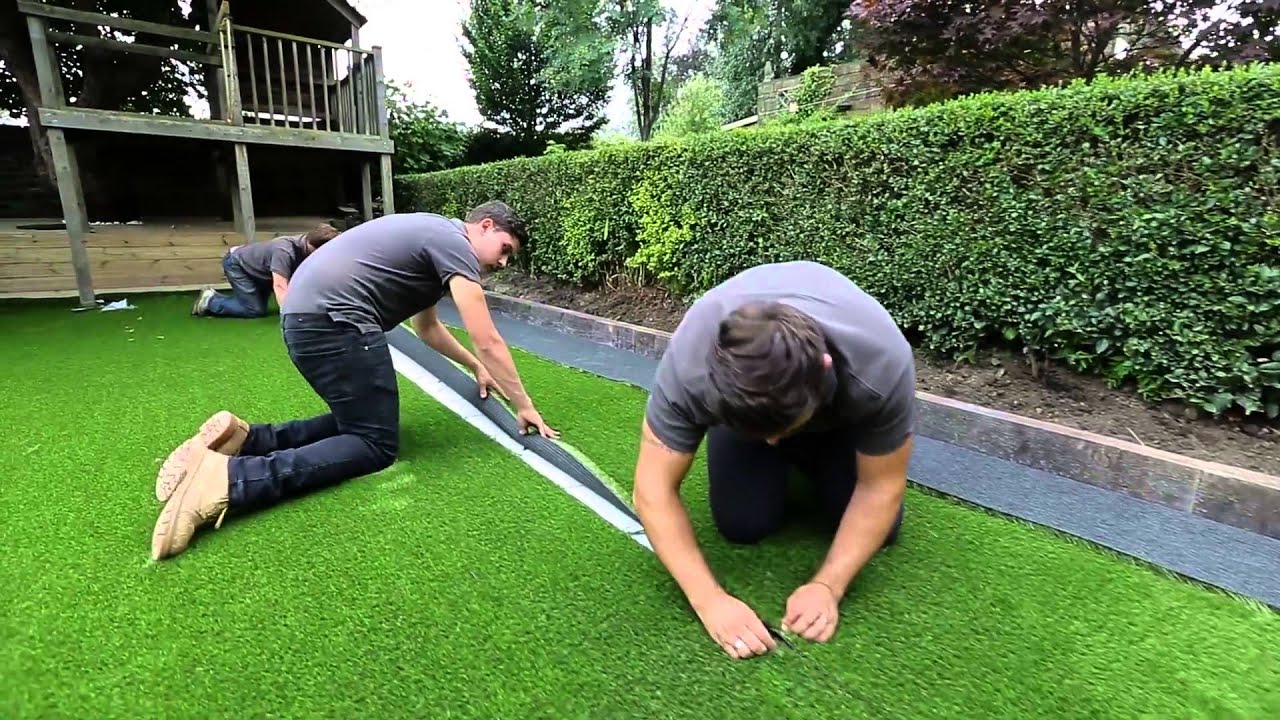
Day three is turf installation. We roll out the product, cut to fit, and seam where needed. Good seam work is invisible — you should not be able to find the seams walking the yard. We use a hot-bond seam tape and adhere with a two-part adhesive that sets rigid, not flexible, so the seam stays closed under foot traffic and heat cycles.
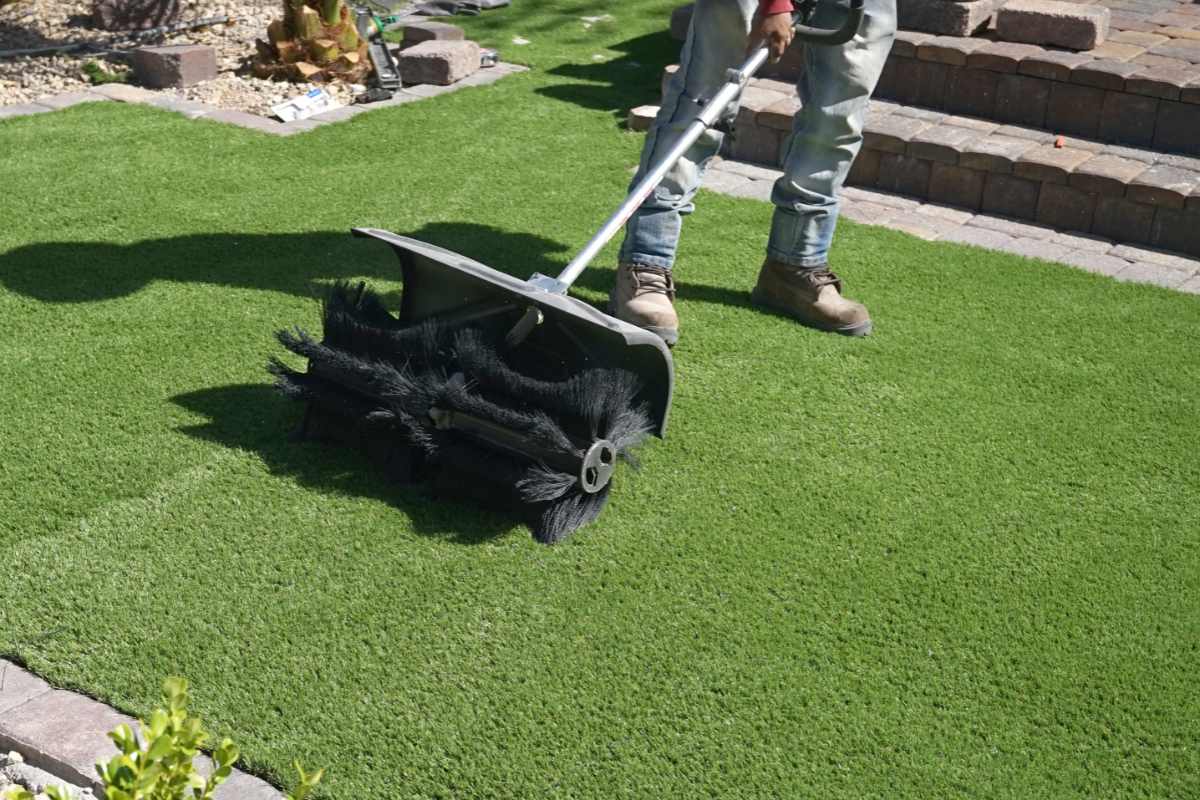
Day four is infill and finish. We spread the infill in multiple passes, brush the blades upright with a power broom, and do a final inspection with the homeowner walking the yard. You get care instructions and a walkthrough of the warranty. Most Allen families are using the yard with their dogs the same evening.
How long does artificial grass actually last in Allen's climate?
We tell clients to plan for twelve to fifteen years on a well-installed pet yard, and fifteen to twenty years on a decorative lawn with lighter use. Allen's climate is harder on turf than, say, Minnesota — the UV exposure and temperature swings do degrade the fibers over time — so the product choice matters more than it might in a milder region.
The products we use for residential installations carry an eight-year manufacturer warranty against fiber breakdown and color fade. We back that with our own two-year workmanship warranty on seams, edges, and base integrity. We have installations in Twin Creeks and Star Creek that are going on nine and ten years and still look close to original. The ones that age fastest are the old first-generation polypropylene products — cheap turf from a decade ago, not the polyethylene and nylon blends we use today.
Maintenance is minimal but not zero. A monthly rinse keeps the infill fresh. A power broom pass once or twice a year keeps the blades upright. If you have large shade trees — cottonwoods or live oaks, common in older Allen neighborhoods — leaf litter needs to come off the turf surface before it decomposes into the infill. That is genuinely the hardest part of owning synthetic turf: raking leaves. We are comfortable telling clients that clearly rather than pretending the product is completely zero-effort.
Services Available in Allen
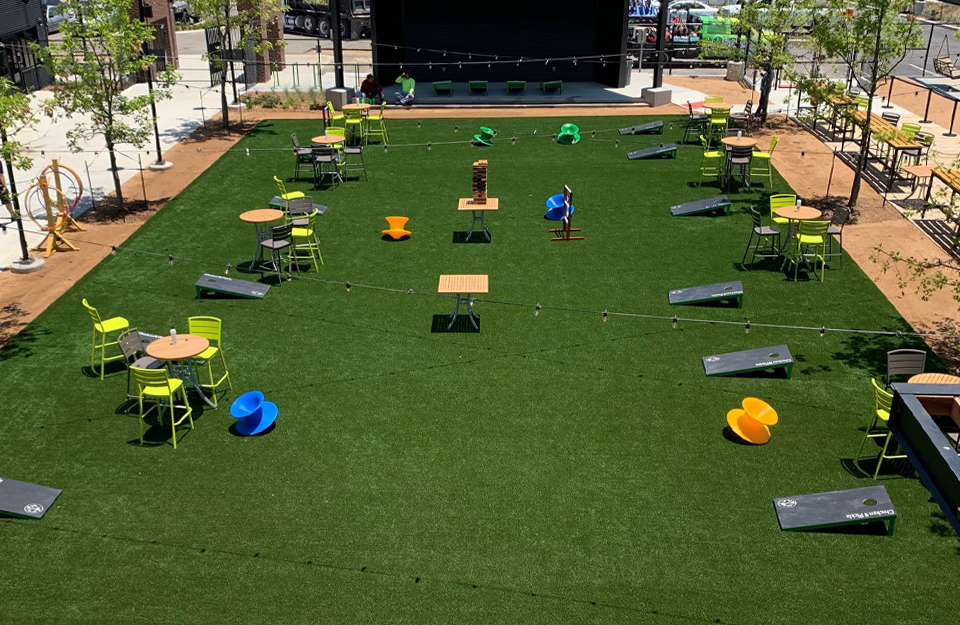
Commercial Artificial Grass Installation
Professional Commercial Artificial Grass Installation in Allen, TX.
View Service
Residential Artificial Grass Installation
Professional Residential Artificial Grass Installation in Allen, TX.
View Service
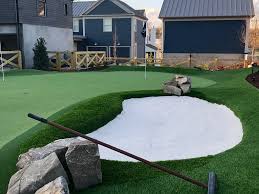
Artificial Grass Putting Green Design
Professional Artificial Grass Putting Green Design in Allen, TX.
View Service
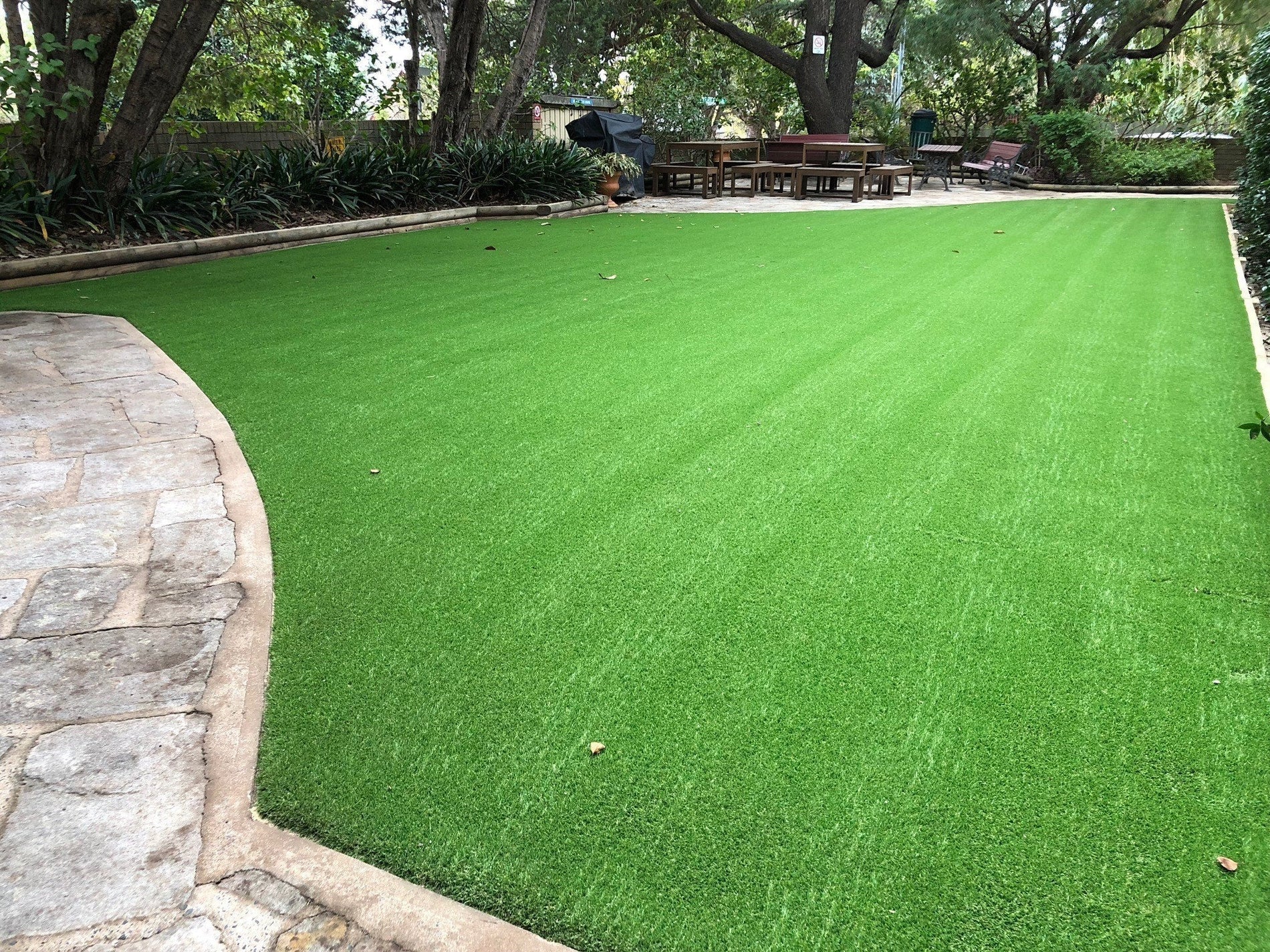
Artificial Grass Maintenance
Professional Artificial Grass Maintenance in Allen, TX.
View Service
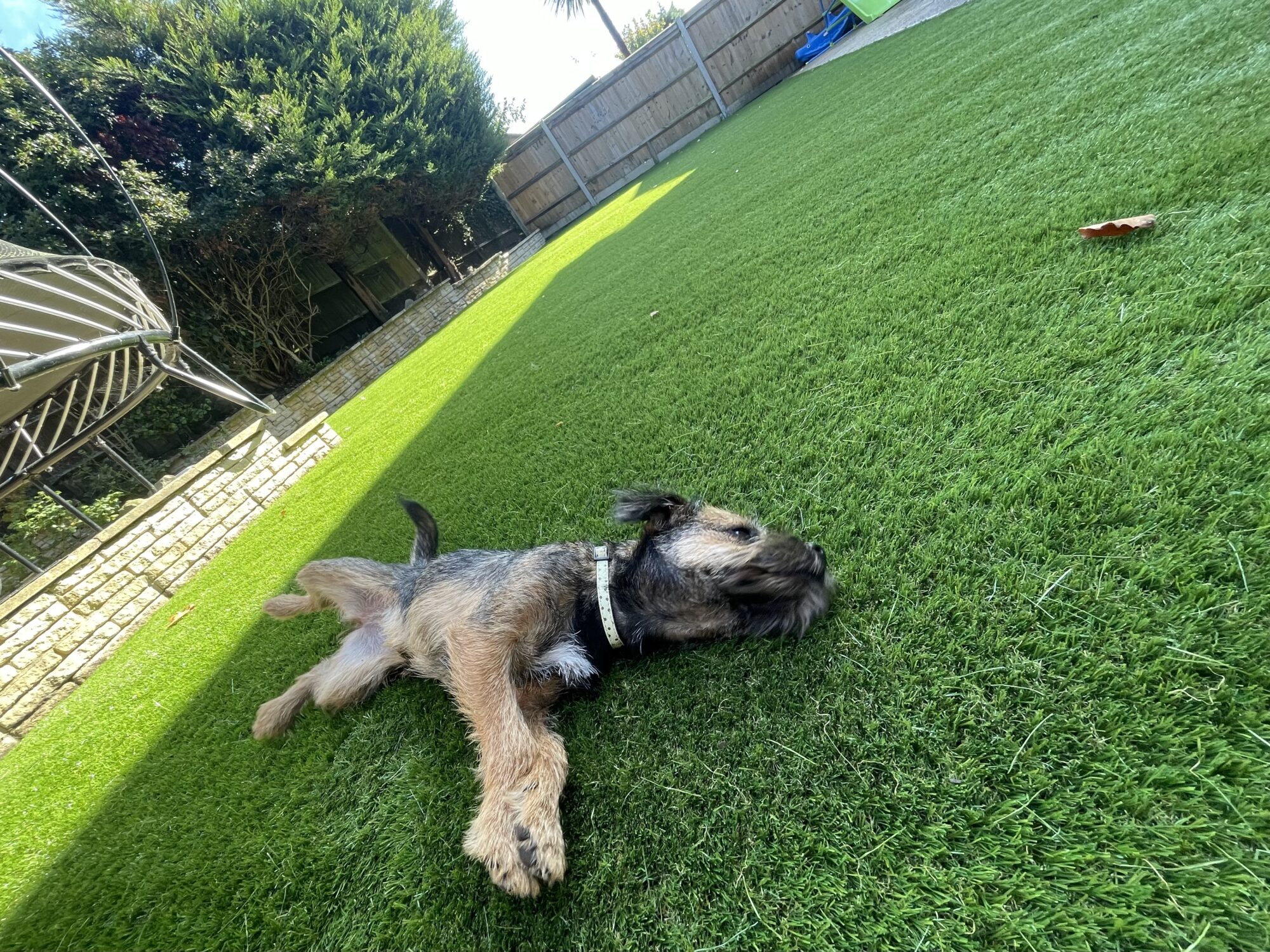
Artificial Grass For Pets
Professional Artificial Grass For Pets in Allen, TX.
View Service
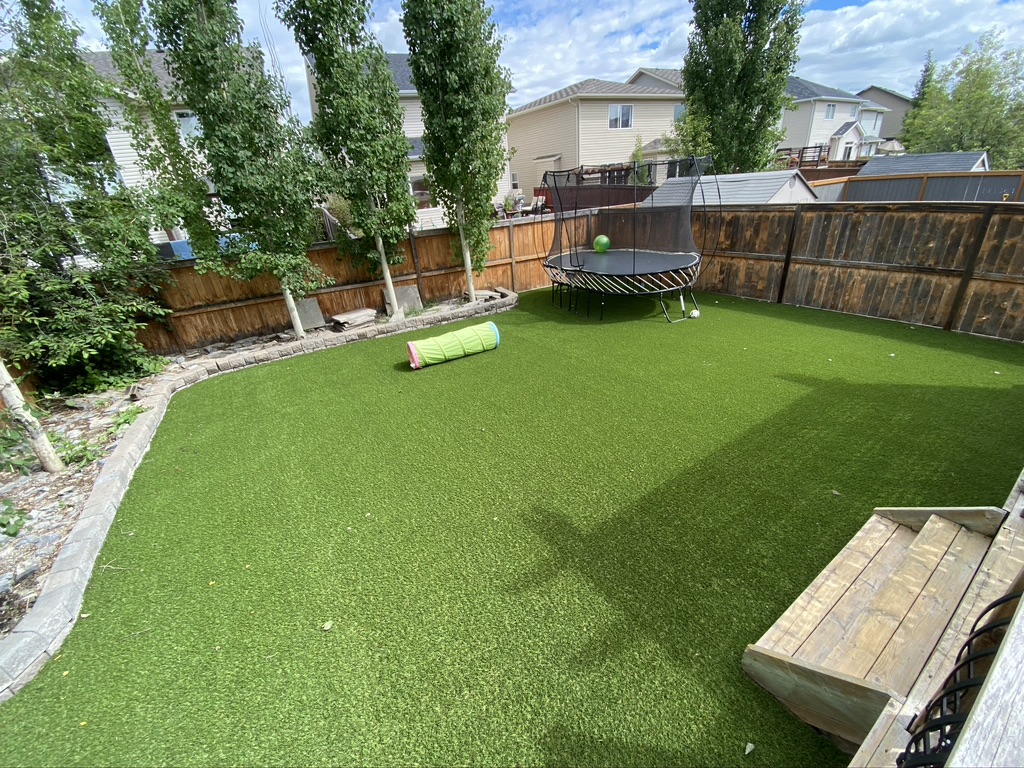
Artificial Grass Repair
Professional Artificial Grass Repair in Allen, TX.
View Service
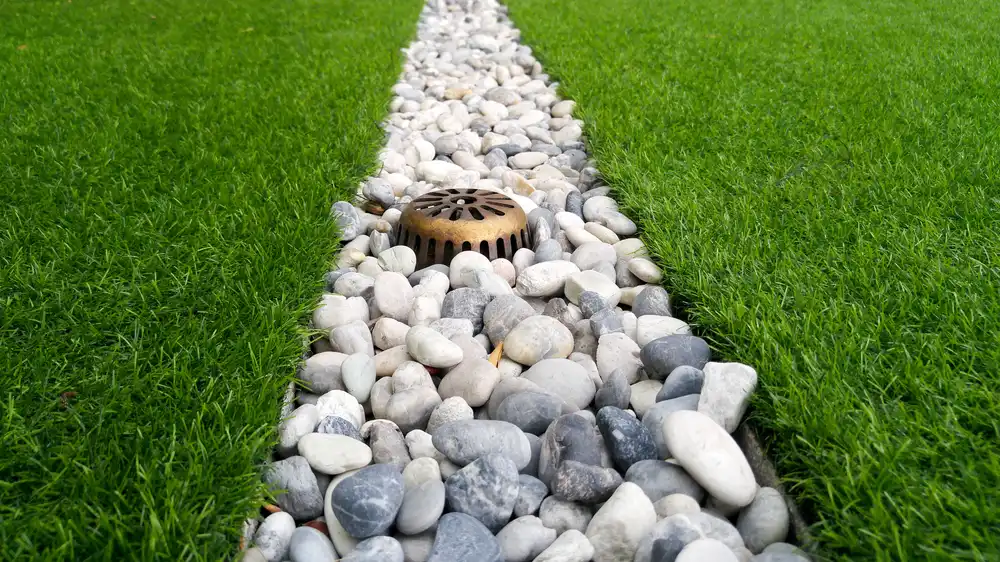
Artificial Grass Drainage Solutions
Professional Artificial Grass Drainage Solutions in Allen, TX.
View Service
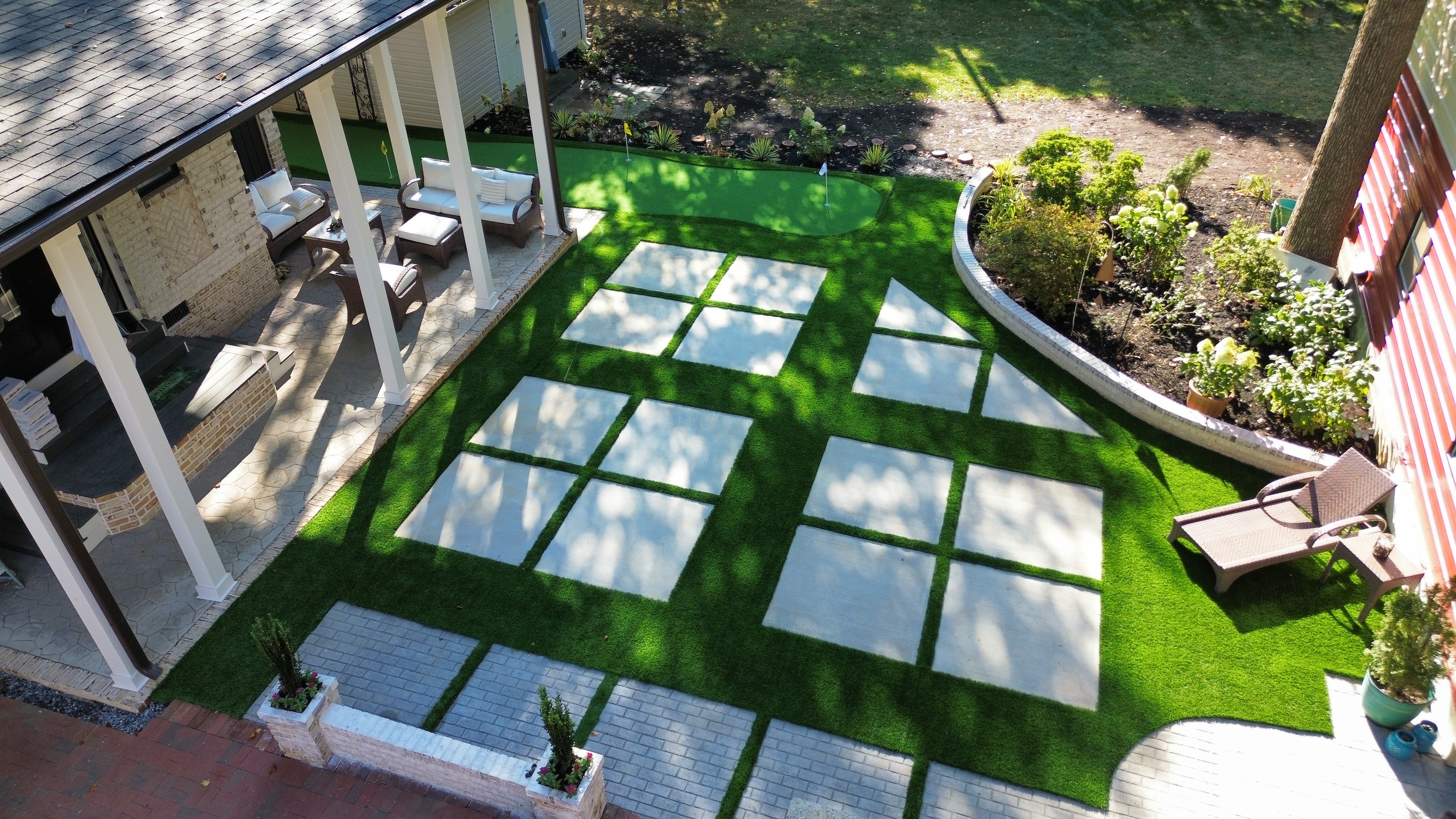
Artificial Grass Consultations
Professional Artificial Grass Consultations in Allen, TX.
View Service
Artificial Grass Removal And Replacement
Professional Artificial Grass Removal And Replacement in Allen, TX.
View Service
Nearby Cities We Serve
Ready to talk through your Allen yard?
Allen TX families trust our pet-turf specialists for drainage-smart synthetic grass. Real neighborhoods, honest installs. Free on-site estimate.
Get a Free On-Site Estimate