

Artificial Grass in Mckinney, TX
McKinney is our second-busiest market after Allen, and it makes sense — the city has one of the densest concentrations of active families with dogs anywhere in Collin County. Stonebridge Ranch alone has more dog-owning households per square mile than almost any neighborhood we serve. We have been doing installs in McKinney for over a decade, and the work we see most often is backyard pet-turf: yards that were losing the war against urine damage, muddy dog tracks, and grass that just gave up under 30-to-50-pound dog traffic. If your McKinney yard fits that description, the answer is almost always a properly installed synthetic turf system with the right base, the right infill, and a drainage design that respects how Collin County clay behaves after rain.
Schedule a Free EstimateLocal Service in Mckinney
McKinney is our second-busiest market after Allen, and it makes sense — the city has one of the densest concentrations of active families with dogs anywhere in Collin County. Stonebridge Ranch alone has more dog-owning households per square mile than almost any neighborhood we serve. We have been doing installs in McKinney for over a decade, and the work we see most often is backyard pet-turf: yards that were losing the war against urine damage, muddy dog tracks, and grass that just gave up under 30-to-50-pound dog traffic. If your McKinney yard fits that description, the answer is almost always a properly installed synthetic turf system with the right base, the right infill, and a drainage design that respects how Collin County clay behaves after rain.
Does artificial grass actually solve the urine-brown-spot problem, or does it just hide it?
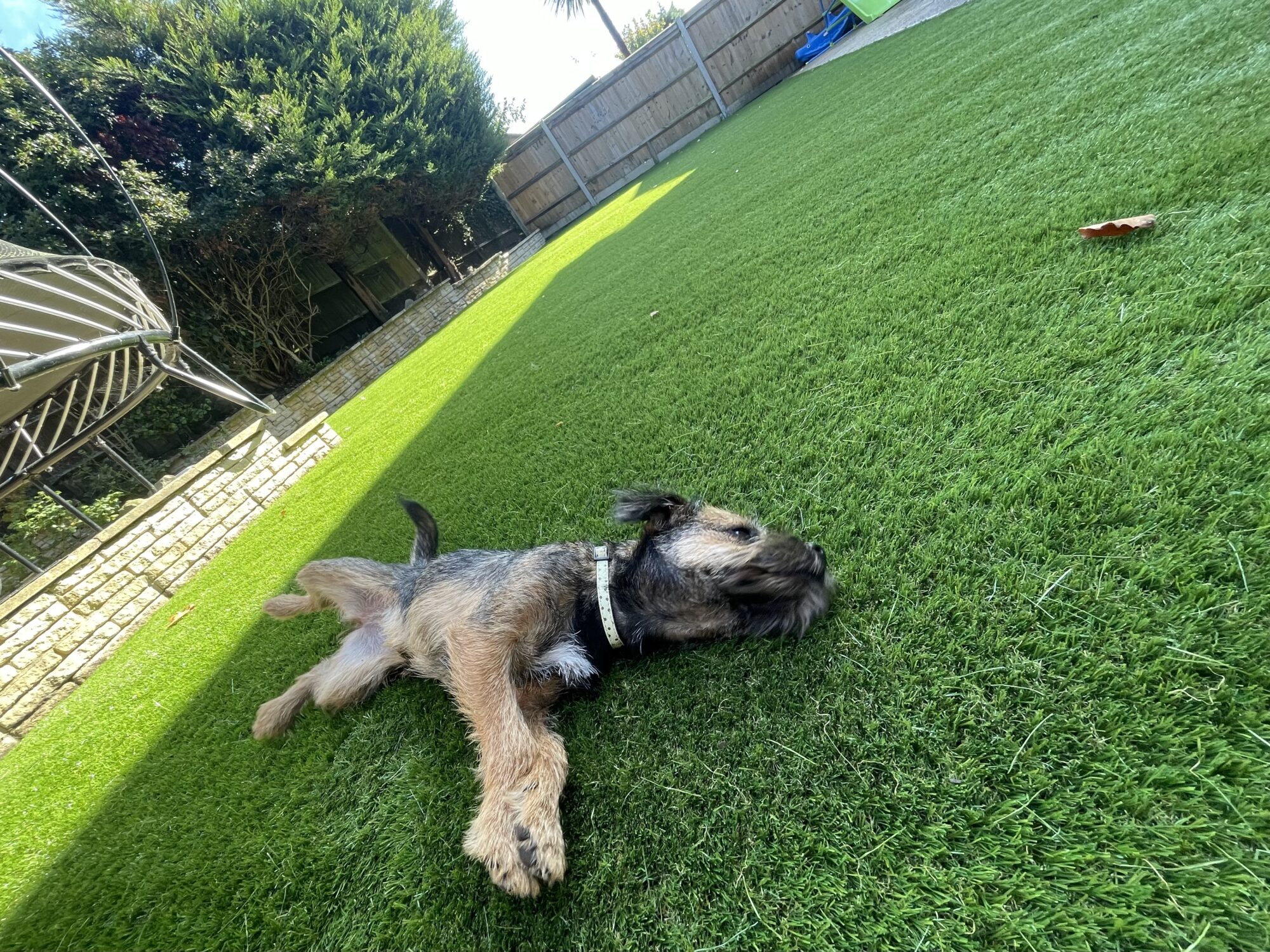
This is the real question behind most of our McKinney calls, and we will answer it directly. Natural grass browns from dog urine because the high nitrogen concentration in urine essentially fertilizer-burns the root system. The grass dies. Synthetic turf does not have roots to kill, so it does not brown. That part is genuinely solved.
The smell question is separate. If you install turf with no attention to drainage and infill, urine pools in the backing and the yard smells worse than a natural lawn ever did. We have been called in to remediate installs in Adriatica and Tucker Hill neighborhoods where a different contractor laid turf over poorly compacted soil with no drainage plan and a sand-only infill. The yards looked fine and smelled terrible.
Our approach for McKinney dog yards: excavate to proper depth, compact crushed granite base, add zeolite infill blended with crumb rubber. The zeolite is the key — it is a volcanic mineral with a massive surface area that physically adsorbs ammonia molecules. It does not mask smell, it captures it. In a yard with two or three medium-to-large dogs, the zeolite typically lasts three to five years before needing a refresh, which is a simple top-dress process we can do in an afternoon. Most McKinney families with that kind of dog load never notice an odor between applications.
How does Stonebridge Ranch HOA treat artificial turf requests?
Stonebridge Ranch is one of McKinney's most active HOA communities, and their architectural review process is thorough. We have submitted and received approval for many installations across the Ranch in the last several years. Here is what they are looking for.
The HOA wants to see that the turf will not look artificial or cartoonish from the street. They typically require a blade height between 1.5 and 2 inches, a color that reads as natural Kentucky bluegrass or Bermuda rather than a bright crayon green, and an installation that properly edges at sidewalks and beds without leaving raw cut edges visible. They also pay attention to the perimeter — no loose edges, no exposed backing, no gravel borders that look out of character with the neighborhood aesthetic.
We handle the Stonebridge submission packet as part of the project for no additional charge. We include a product spec sheet, a color swatch, photos of comparable installed McKinney yards, and a written description of our installation method. Turnaround from the HOA is usually two to three weeks. We schedule the install start date around that window so there is no delay for the homeowner. Trinity Falls is a newer community with slightly more flexible guidelines, but we approach every McKinney HOA with the same documentation process.
We have four kids and two dogs. What product should we use in McKinney?
Four kids and two dogs is our favorite client profile because it is the situation we know best. The yard needs to do three things simultaneously: feel comfortable barefoot for kids, drain fast enough to handle pet use, and hold up to the kind of lateral movement that comes from kids playing tag and dogs chasing them.
For that combination, we use a dual-fiber product — a blend of polyethylene and nylon fibers in the same tuft. The polyethylene provides the soft, grass-like feel underfoot. The nylon adds resilience, meaning the blades spring back rather than lying flat after traffic. Face weight around 70 to 80 ounces per square yard. Pile height around 1.75 inches — tall enough to feel lush, short enough that it does not trap debris or require constant brushing.
For infill in a mixed-use yard like this, we do a split: zeolite in the high-dog-traffic zones (usually the back fence run and near the door), crumb rubber in the play area. The crumb rubber adds about a half-inch of cushion, which matters when kids are doing cartwheels or falling off playground equipment. We did this exact setup for a family near Old East McKinney with two cattle dogs and three kids under ten. Two years later they have had zero issues, the yard still bounces back after heavy play days, and the dogs have not found a way under the edges despite trying.
What is the drainage situation at Trinity Falls and why does it matter for turf?
Trinity Falls is built on topography that is hillier than most of the Collin County floor, with some lots having meaningful grade changes from back fence to house. That slope is actually an advantage for turf drainage — water has somewhere to go — but it requires us to pay close attention to where the drainage exits the turf area.
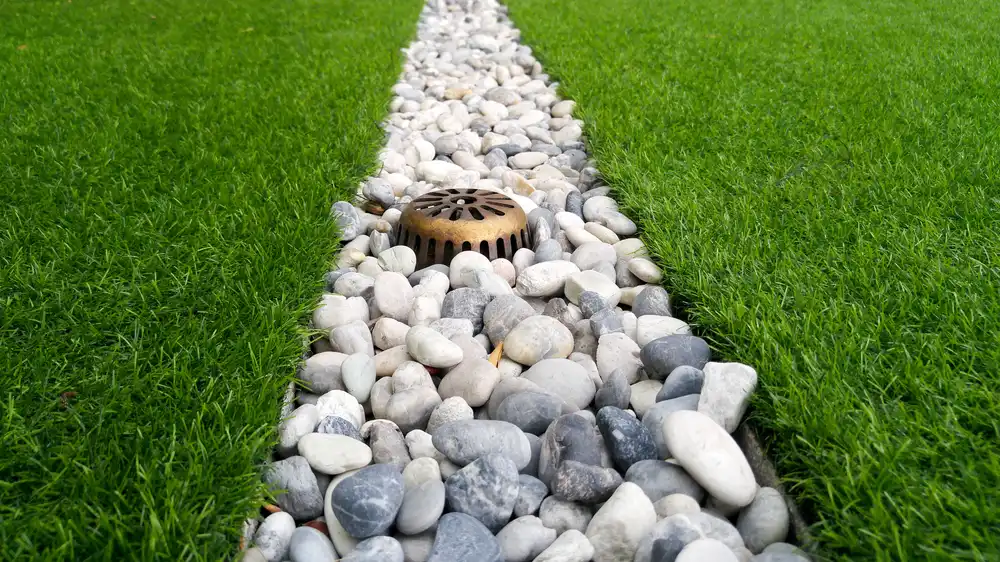
If we just lay turf over a flat base on a sloped lot without designing the base grade properly, rain can sheet across the surface instead of percolating through. We run a 1.5 to 2 percent grade in the base toward a defined drainage point — usually either a yard drain connected to the storm line or a gravel sump behind the back fence. On properties with municipal storm drainage connections, we tie in directly. On properties without, the gravel sump with perforated pipe is the standard solution and handles normal North Texas rain events without backing up.
We checked out a Trinity Falls yard last spring where the homeowner had a nice slope to work with but the previous natural lawn had been graded flat to create a play area. The result was a clay bowl that held standing water two days after any rain. Our re-grade plus turf install gave them a fast-draining surface that was dry enough for their dogs within 30 minutes after storm events. That is the drainage-first mentality — the turf is the finish layer, but the base design is where the performance comes from.
What does installation week look like for a McKinney family?
Our McKinney residential installs typically run three to four days for a standard backyard. We work Monday through Saturday and schedule around school pickups and other family constraints when possible — we know most McKinney families have full schedules.
Day one: We arrive by 7:30 or 8 AM, mark any irrigation lines, and begin excavation. We remove existing grass and soil to a four-to-five-inch depth, using a sod cutter for the top layer and a mini-excavator for larger areas. All material is hauled off the property — no piling it in your side yard for you to deal with. By end of day, the ground is bare and ready for base.
Day two: Crushed granite delivery and compaction. We spread the base material in two lifts, compact each lift with a plate compactor, and finish-grade to the drainage slope. This is the day where the drainage mat goes in if the job calls for one. We also cut and cap any irrigation risers that fall in the turf area.
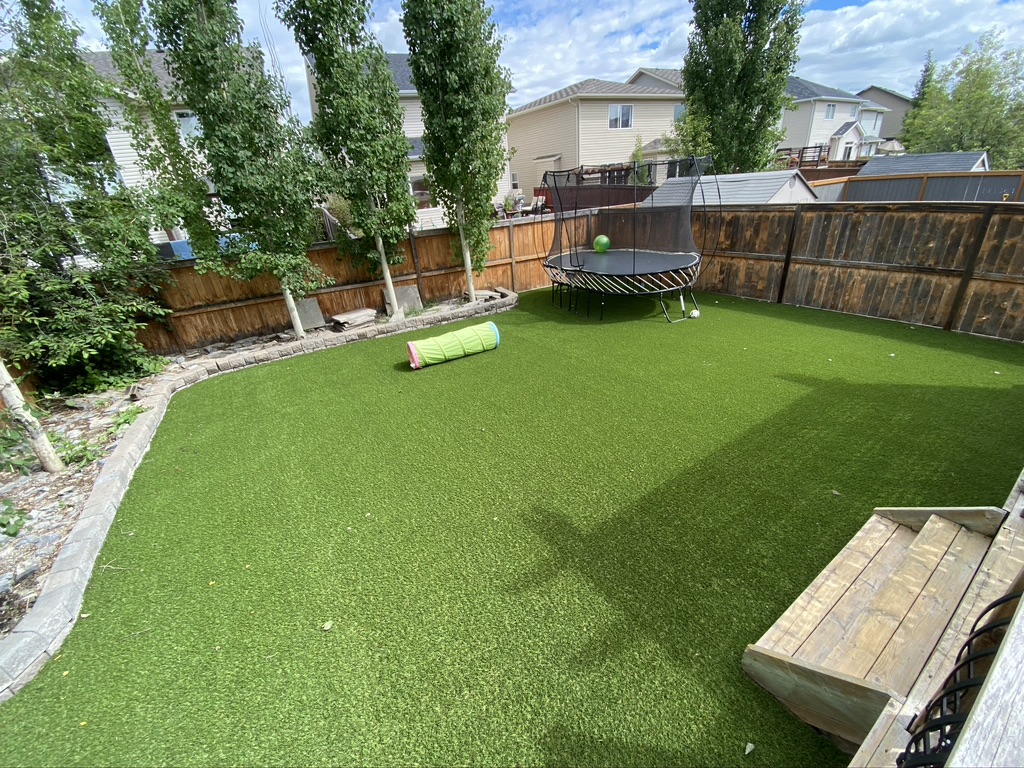
Day three: Turf installation. We roll, cut, seam, and secure. For a typical McKinney backyard, seaming happens once or twice depending on the width of the space and how the turf rolls align with the longest dimension. We glue seams with reactive adhesive on seam tape. Nails around the perimeter on six-inch spacing. Bender board or aluminum edging at beds and hardscape transitions.
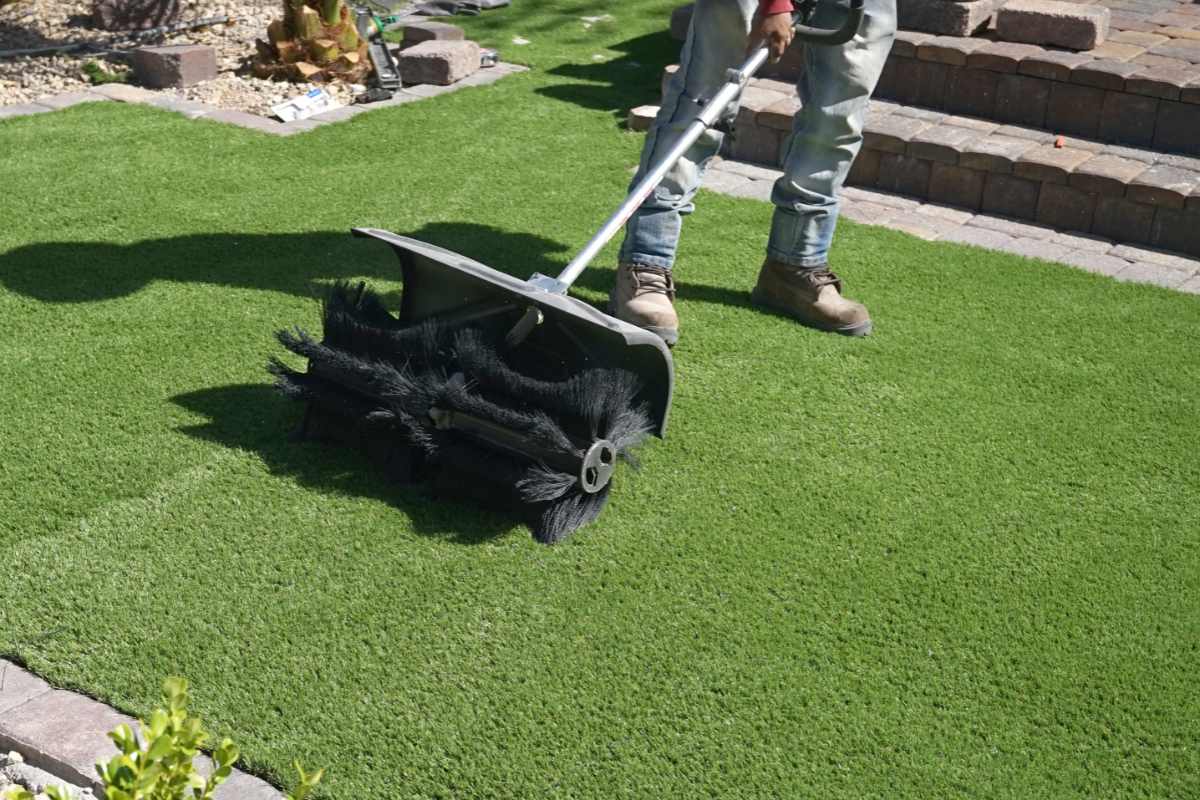
Day four: Infill, brushing, walkthrough. We spread infill by hand and power broom, then do a final walk with you pointing out every seam location so you can verify they are invisible. You leave with a one-page care sheet and our direct number.
Services Available in Mckinney
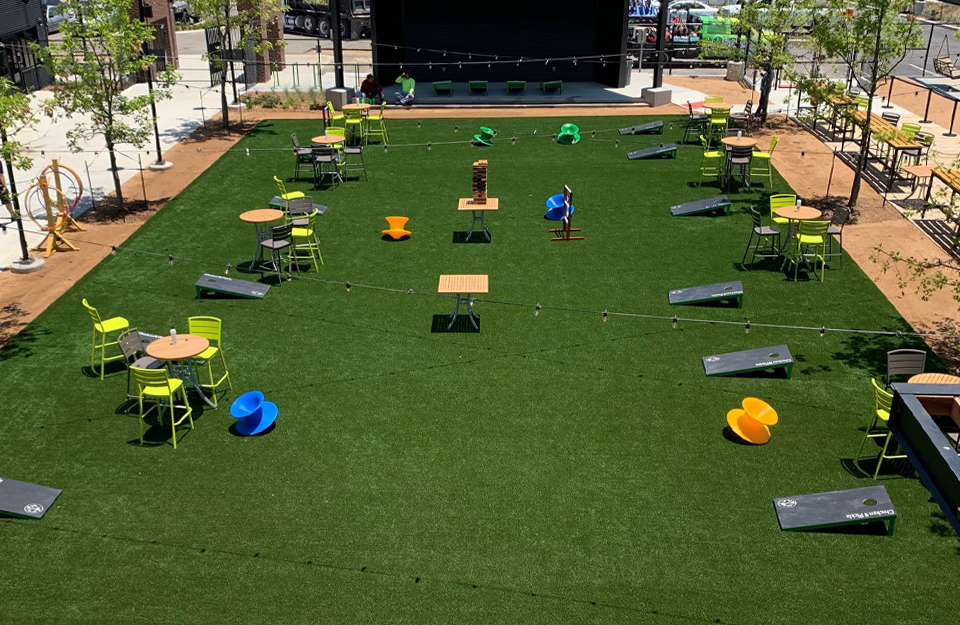
Commercial Artificial Grass Installation
Professional Commercial Artificial Grass Installation in Allen, TX.
View Service
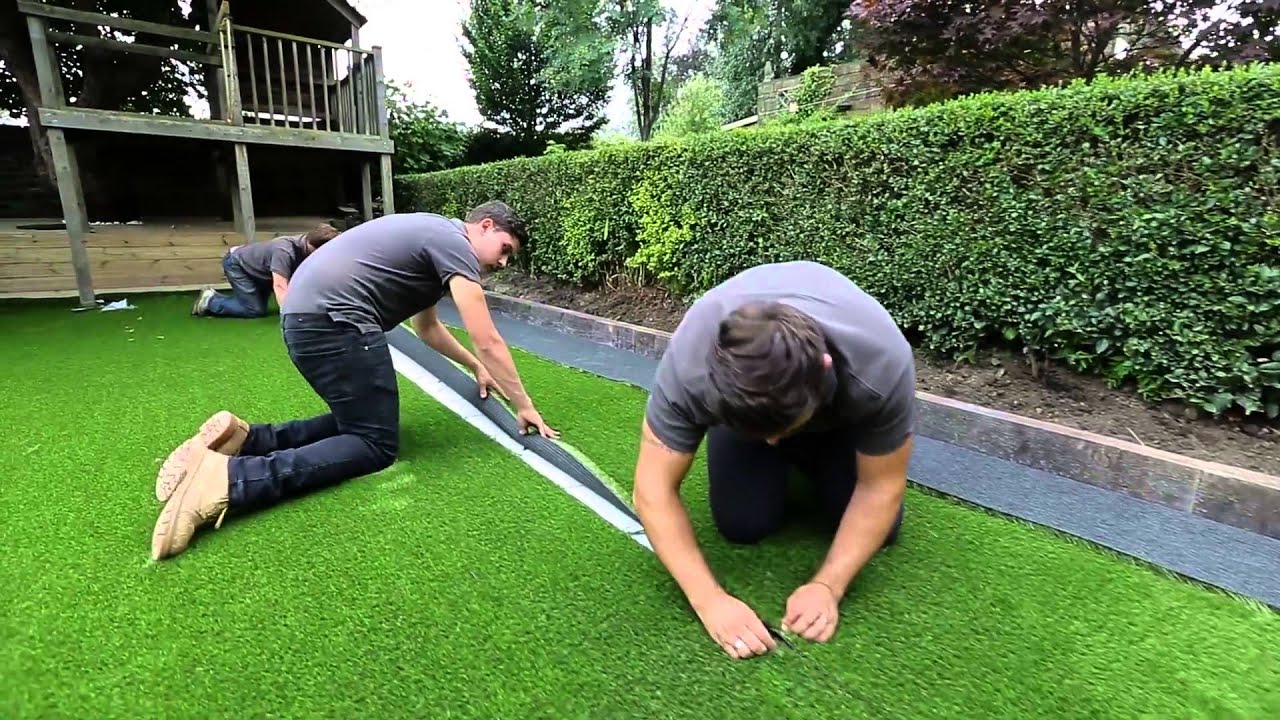
Residential Artificial Grass Installation
Professional Residential Artificial Grass Installation in Allen, TX.
View Service
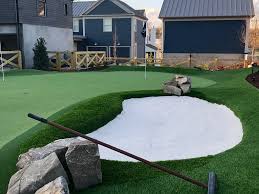
Artificial Grass Putting Green Design
Professional Artificial Grass Putting Green Design in Allen, TX.
View Service
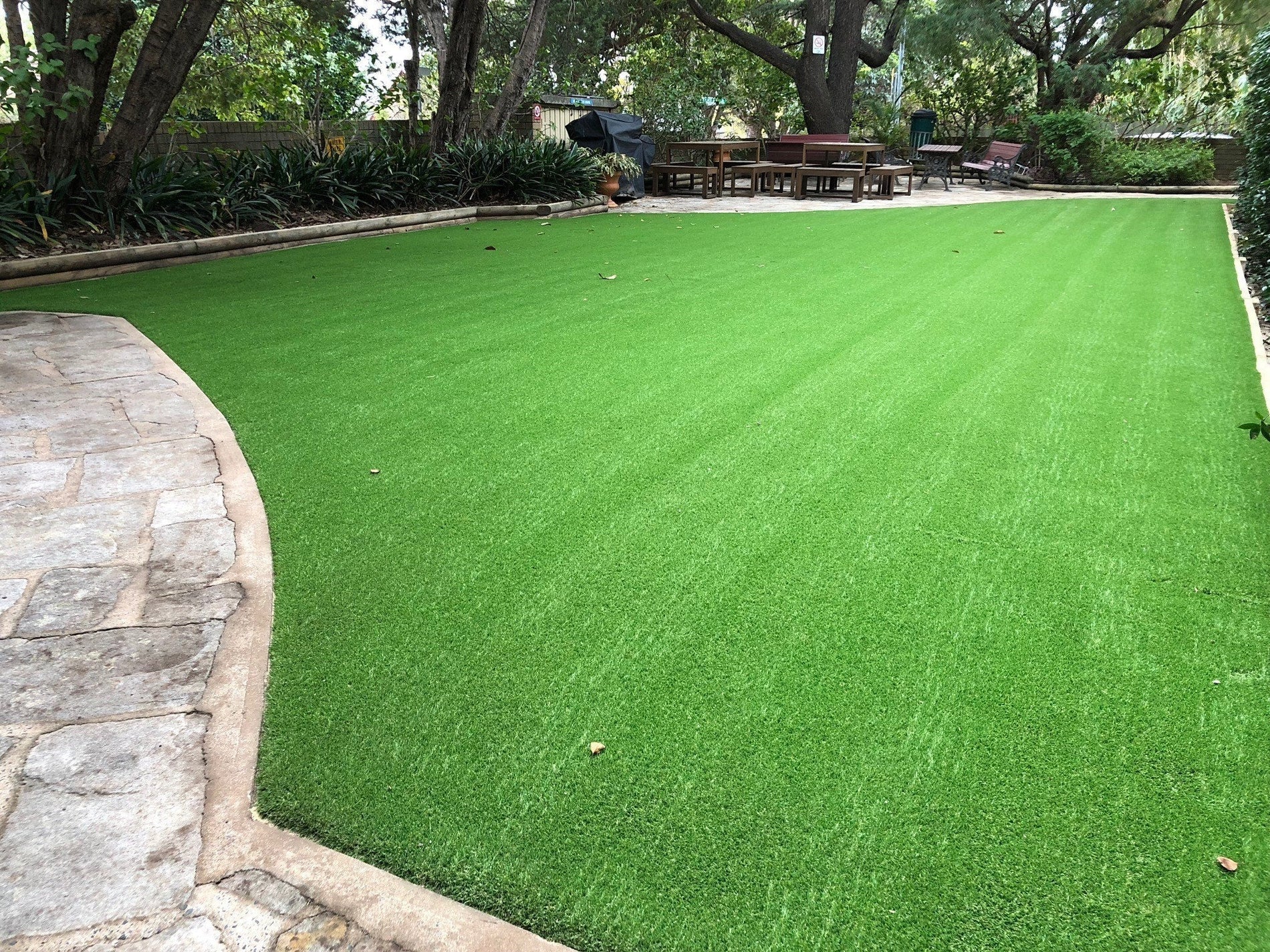
Artificial Grass Maintenance
Professional Artificial Grass Maintenance in Allen, TX.
View Service
Artificial Grass For Pets
Professional Artificial Grass For Pets in Allen, TX.
View Service
Artificial Grass Repair
Professional Artificial Grass Repair in Allen, TX.
View Service
Artificial Grass Drainage Solutions
Professional Artificial Grass Drainage Solutions in Allen, TX.
View Service
Artificial Grass Consultations
Professional Artificial Grass Consultations in Allen, TX.
View Service
Artificial Grass Removal And Replacement
Professional Artificial Grass Removal And Replacement in Allen, TX.
View Service
Nearby Cities We Serve
Let's walk your McKinney yard together
McKinney TX pet-turf installs done right. Drainage-first approach for Collin County clay. Serving Stonebridge Ranch, Trinity Falls, Tucker Hill & more.
Schedule a Free Estimate