
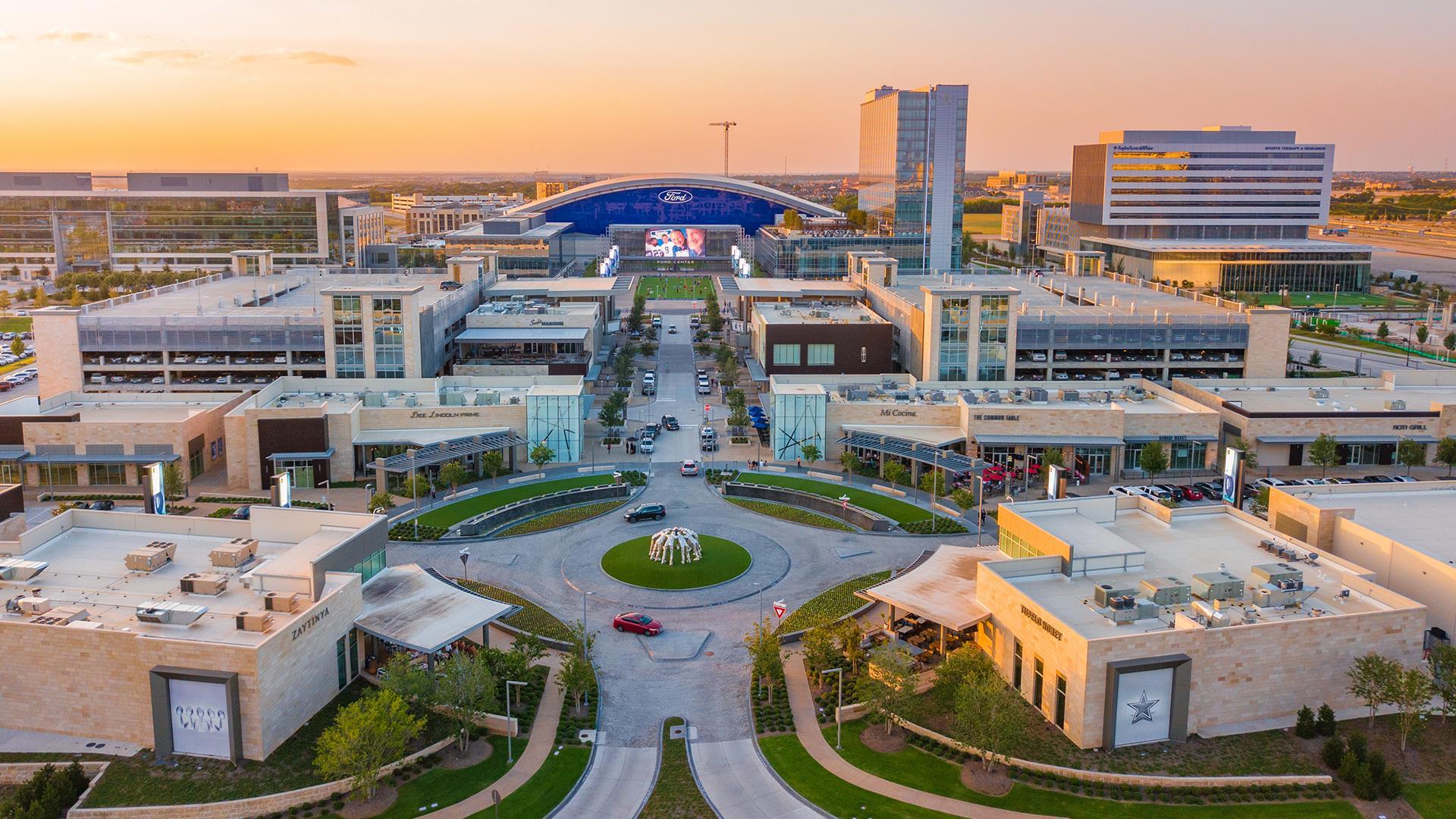
Artificial Grass in Frisco, TX
Frisco has changed a lot in the time we have been working here. The neighborhoods around The Star and Warren Sports Complex that were bare lots fifteen years ago are now established communities with mature trees, active families, and, consistently, a lot of dogs. What has not changed is the soil. Frisco sits on the same Blackland Prairie clay that defines most of Collin and Denton counties, and that clay is just as uncooperative under a natural lawn in Frisco as it is in Allen or McKinney. We get called in to Frisco yards because the family tried to keep natural grass through several years of active dogs and finally gave up. Our installs here lean heavily on the drainage foundation — get the base right, and the turf on top takes care of itself.
Request a Free EstimateLocal Service in Frisco
Frisco has changed a lot in the time we have been working here. The neighborhoods around The Star and Warren Sports Complex that were bare lots fifteen years ago are now established communities with mature trees, active families, and, consistently, a lot of dogs. What has not changed is the soil. Frisco sits on the same Blackland Prairie clay that defines most of Collin and Denton counties, and that clay is just as uncooperative under a natural lawn in Frisco as it is in Allen or McKinney. We get called in to Frisco yards because the family tried to keep natural grass through several years of active dogs and finally gave up. Our installs here lean heavily on the drainage foundation — get the base right, and the turf on top takes care of itself.
Do Frisco's newer neighborhoods have drainage issues that affect turf installation?
Yes, and it is worth understanding why before you install anything. Many Frisco subdivisions built in the 2010s and early 2020s were graded with the house pad raised and the lot sloped away — which is correct for foundation drainage — but the backyard often ends up with a low point against the back fence or in a corner. In heavy rain, those low points collect water.
Before we quote any Frisco job, we walk the yard in wet conditions if possible, or we ask the homeowner to describe where the water goes after a storm. If there is a collection point, we design a drain tile run or a gravel sump into the base plan before we ever talk turf. We had a family in the Eldorado Estates area who had a corner that held a four-to-six-inch-deep puddle for two days after heavy rain. Their dogs refused to use that corner of the yard. We excavated the low point deeper than the rest of the base, added a catch basin connected to their existing yard drain line, and the pooling problem was gone. The dogs now use the full yard.
Frisco also gets some of the same clay heave issues as the rest of the Dallas market — freeze-thaw cycles cause the clay to expand and contract slightly, which can push base material around over years if the compaction was not thorough. We compact in two lifts for that reason, and we check for soft spots before we unroll turf.
Is there a turf product that works for both a putting green and a dog yard in Frisco?
They are different products, and you will not be happy trying to make one serve both purposes. Putting green turf — what we call a nylon performance surface — is cut very short, around 3/8 to 1/2 inch, and the fibers are dense and firm to produce consistent ball roll. Put dogs on that surface and they love it, but it heats up fast because there is very little pile to shade the infill, and it does not drain pet waste as well as a taller pet product.
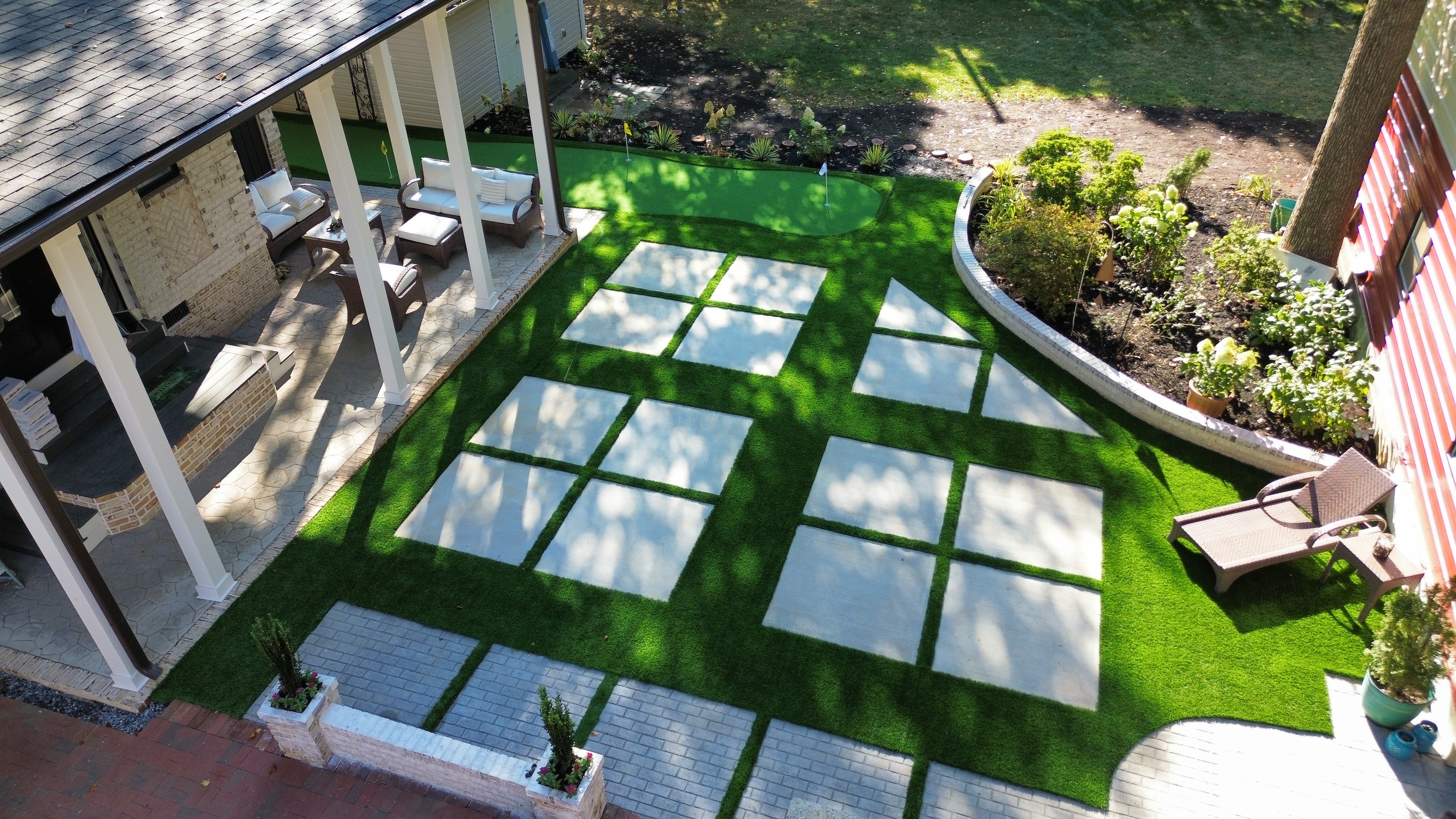
For Frisco families who want both — a practice green and a dog yard — the solution is to zone the space. We design the putting surface as a defined footprint with its own edging, typically a curved shape that sits in one part of the yard. The remainder of the backyard uses a 1.75-inch pile pet turf with the zeolite infill. The two products meet at a shared aluminum bender board edge and look intentional rather than patched.
We have done a dozen of these combo installs in Frisco. The Star area has a number of golf-interested families who also have dogs. One client near the Fields development had a three-dog household and was an avid golfer. We gave him a 350-square-foot three-hole practice green in the south corner and 2,400 square feet of pet turf around the perimeter and side yards. He calls it the best outdoor upgrade he has ever made to a property.
How does Frisco's summer heat affect pet paws on synthetic turf?
The surface temperature question matters more in Frisco than in some other markets because Frisco gets more consistent direct sun through June, July, and August than the more tree-established neighborhoods in older Plano or Richardson. If your backyard faces south and has no shade structure, your turf surface in full sun on a hot afternoon will be significantly warmer than the ambient air temperature.
The products we recommend for open Frisco yards use a lighter-colored infill — either a light tan coated sand or a natural silica sand — rather than black crumb rubber as the primary infill. The color difference alone reduces surface temp by roughly 15 to 20 degrees on a hot afternoon. We also have access to an infill product called TigerCool that uses an evaporative coating on the sand granules to actively cool the surface — it drops temps another 5 to 10 degrees under full sun. For families with smaller dogs or dogs with sensitive paws, this is worth the modest cost premium.
One thing we tell every Frisco client: your dogs already know when the surface is too warm, and they will tell you by sitting at the door instead of going out. Most dogs self-regulate. But giving them a quick rinse of the turf before afternoon play is a thirty-second habit that keeps surface temperatures in a comfortable range for both pets and kids barefoot.
What is the process for HOA approval in Frisco master-planned communities?
Frisco has a mix of HOA structures. Some neighborhoods are managed by large regional property management firms with standardized review processes. Others, particularly in older mid-2000s developments, have more informal boards with less consistent documentation requirements. We have navigated both.
For any Frisco HOA submission, we prepare a packet that includes the product spec sheet with fiber composition, pile height, and color designation; a site plan sketch showing the installation footprint; photographs of completed comparable installations; and a description of our edge and perimeter treatment. In our experience, the primary HOA concerns in Frisco are: does it look real enough from the street, are the edges clean, and is there a maintenance plan. We address all three in the written submission.
We have had Frisco approvals come back in as little as one week and as long as four weeks depending on the HOA's meeting schedule. For any subdivision where we do not have a prior approval relationship, we factor in a four-week window and plan the project timeline around it. Getting denied because you did not prepare the paperwork correctly is an avoidable frustration — we handle it so homeowners do not have to.
What does the actual installation week look like in a Frisco yard?
For a typical Frisco backyard in the 1,500 to 2,500 square foot range, we plan three to four working days. Our crew starts early — usually 7:30 AM — to work through the cooler part of the day before afternoon temps climb.
Day one is site prep. We mark and flag any irrigation lines in the zone, then use a sod cutter to remove the top grass layer. Soil excavation follows, down to the depth specified by the drainage plan — usually 4 inches for flat lots, 5 inches where we are adding a drainage mat. All excavated material is loaded and hauled off that same day. We do not leave piles of dirt on the property overnight.
Day two is base work. Crushed decomposed granite goes in and is compacted in two passes with a plate compactor. We check grade with a long level and a transit level on larger yards, ensuring the 1.5 to 2 percent drainage slope is correct across the entire field. Any yard drain connections happen today as well.
Day three is turf installation. We roll out the product, cut to the yard shape, and join panels with seam tape and reactive adhesive. The perimeter is secured with galvanized nails on six-inch centers. Bender board or steel edging at all transitions. This is the day the yard starts to look like a yard.
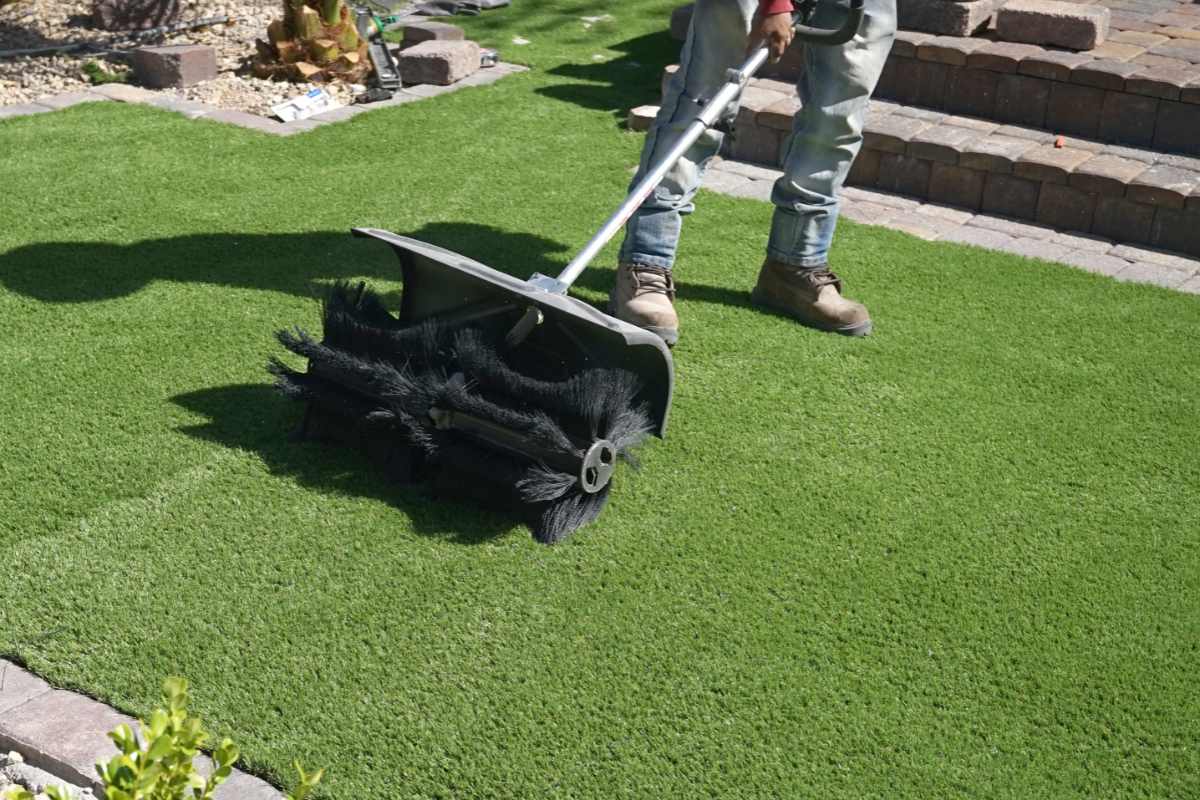
Day four is infill, finish brushing, and walkthrough. We use a drop spreader for the infill, then power broom in multiple directions to work it down into the pile and bring the blades upright. We walk the yard with you, point out every seam location, check all edges, and make sure you are genuinely satisfied before we pack up.
Services Available in Frisco
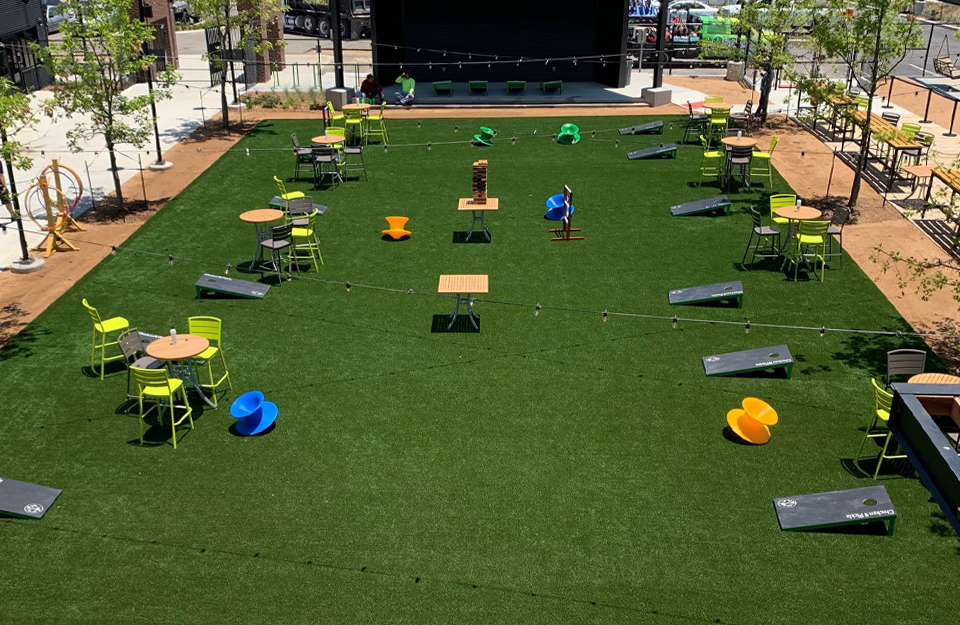
Commercial Artificial Grass Installation
Professional Commercial Artificial Grass Installation in Allen, TX.
View Service
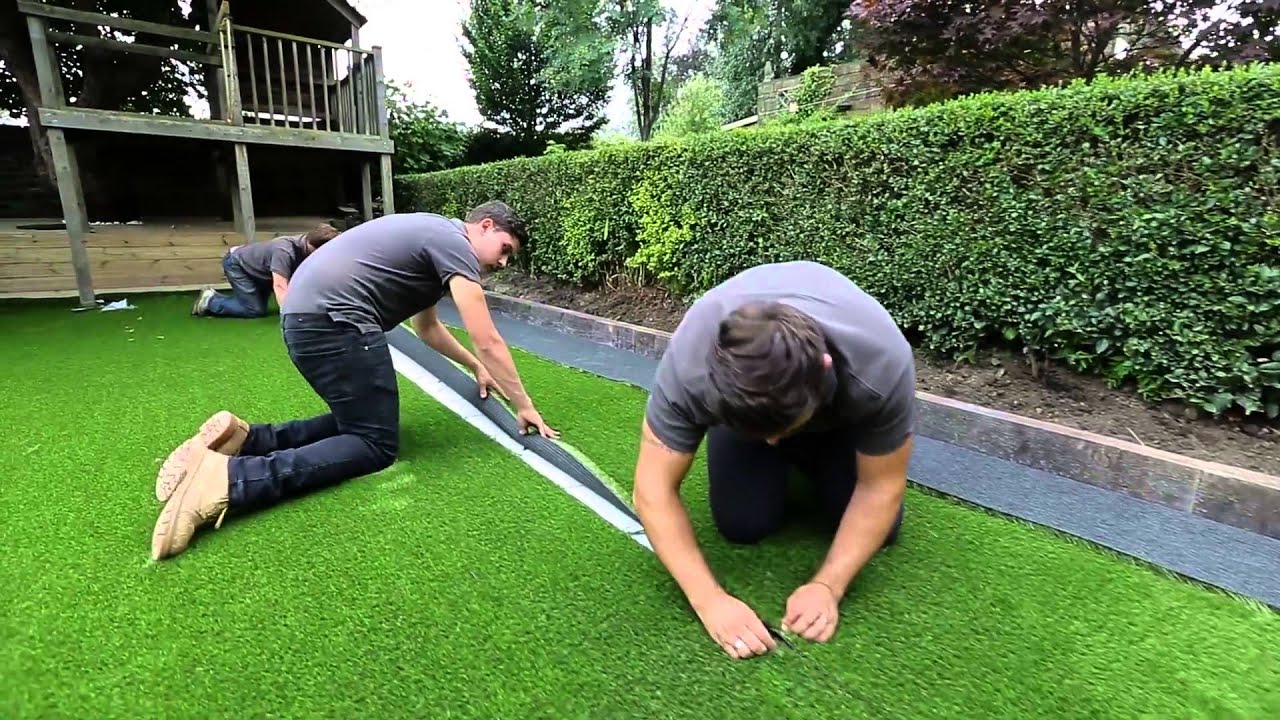
Residential Artificial Grass Installation
Professional Residential Artificial Grass Installation in Allen, TX.
View Service
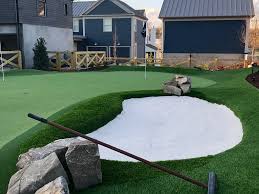
Artificial Grass Putting Green Design
Professional Artificial Grass Putting Green Design in Allen, TX.
View Service
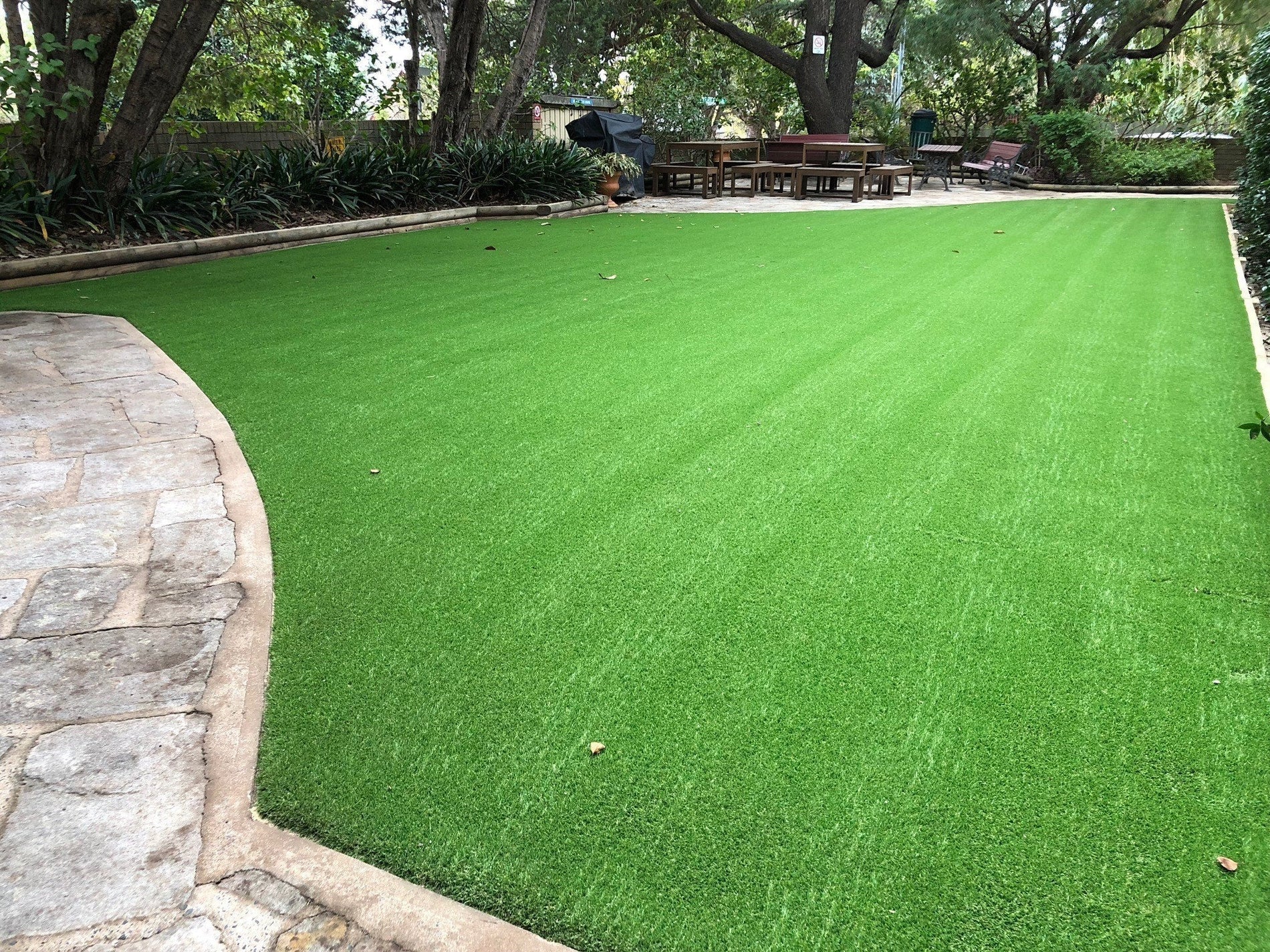
Artificial Grass Maintenance
Professional Artificial Grass Maintenance in Allen, TX.
View Service
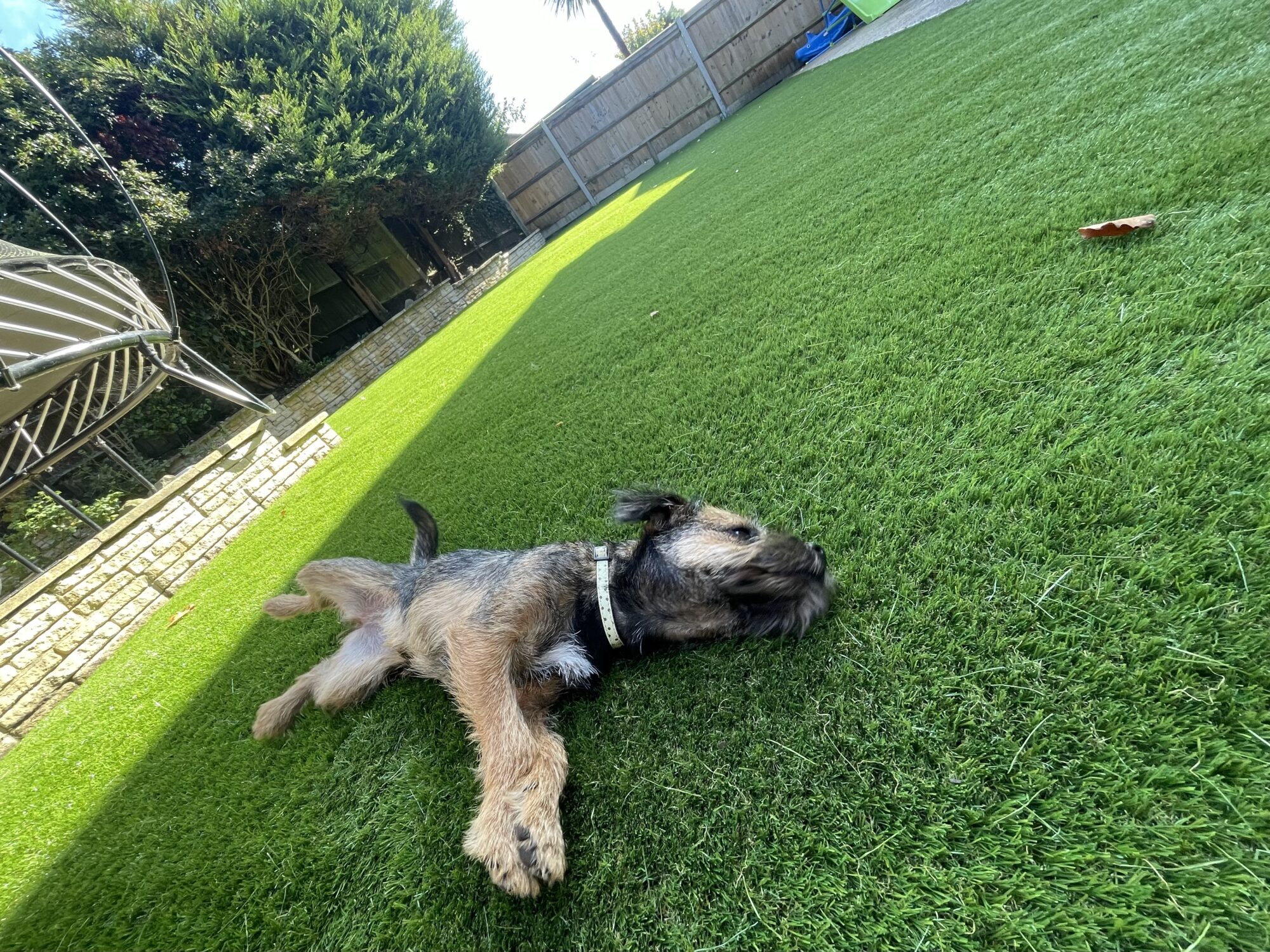
Artificial Grass For Pets
Professional Artificial Grass For Pets in Allen, TX.
View Service
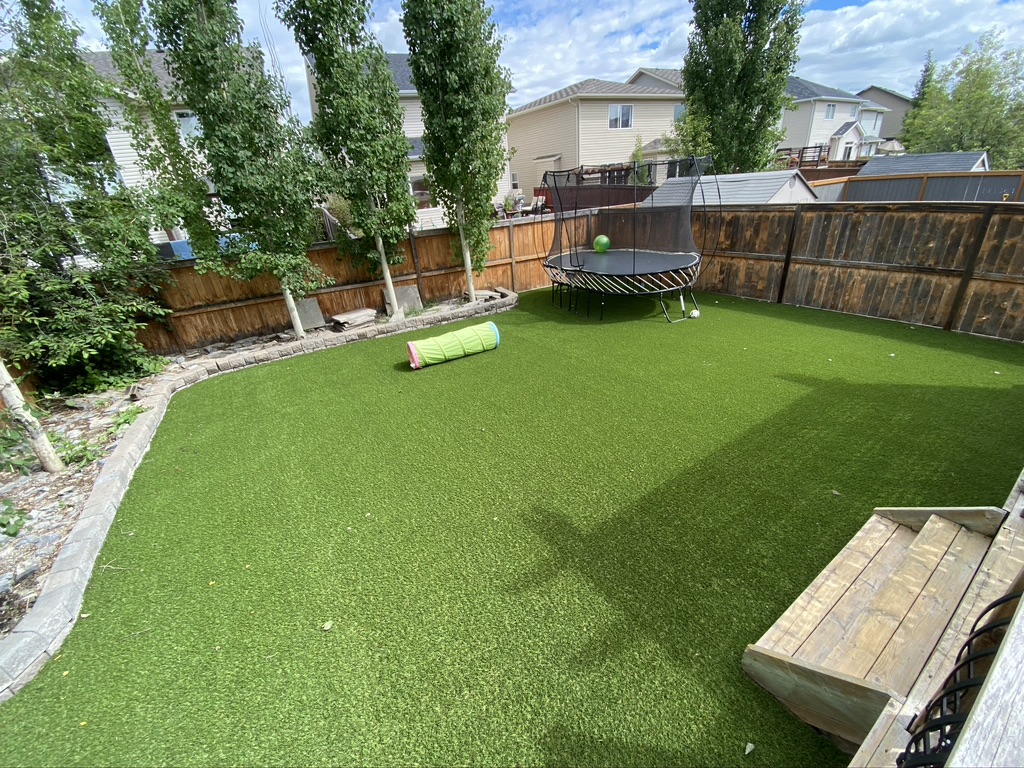
Artificial Grass Repair
Professional Artificial Grass Repair in Allen, TX.
View Service
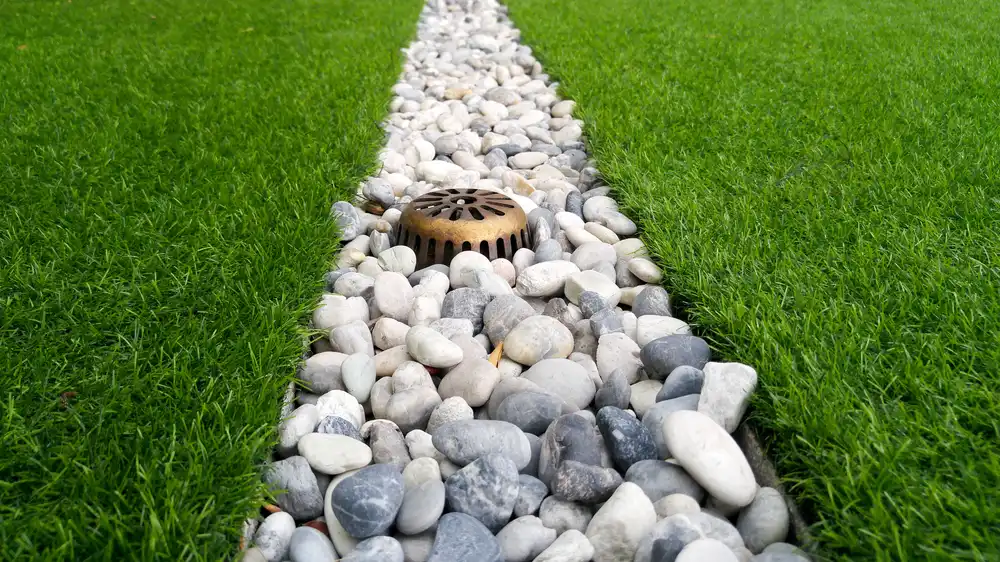
Artificial Grass Drainage Solutions
Professional Artificial Grass Drainage Solutions in Allen, TX.
View Service
Artificial Grass Consultations
Professional Artificial Grass Consultations in Allen, TX.
View Service
Artificial Grass Removal And Replacement
Professional Artificial Grass Removal And Replacement in Allen, TX.
View Service
Nearby Cities We Serve
Get an honest Frisco estimate from a local crew
Frisco TX artificial grass installs for pet-loving families. Drainage-smart base work, HOA-ready documentation, real neighborhood references.
Request a Free Estimate